Introduction
Have you ever searched something on Google and clicked on one of the first few results? Most people do the same. In fact, websites that appear on the first page of Google get the majority of clicks, while websites on later pages often receive very little traffic.
This is where Search Engine Optimization, commonly known as SEO, becomes important.
SEO is one of the most powerful digital marketing strategies because it helps businesses appear in front of people who are already searching for their products, services, or information online.
In this blog, I will explain what SEO is, how it works, why it matters, and how businesses can use it to grow online.
What is Search Engine Optimization (SEO)?
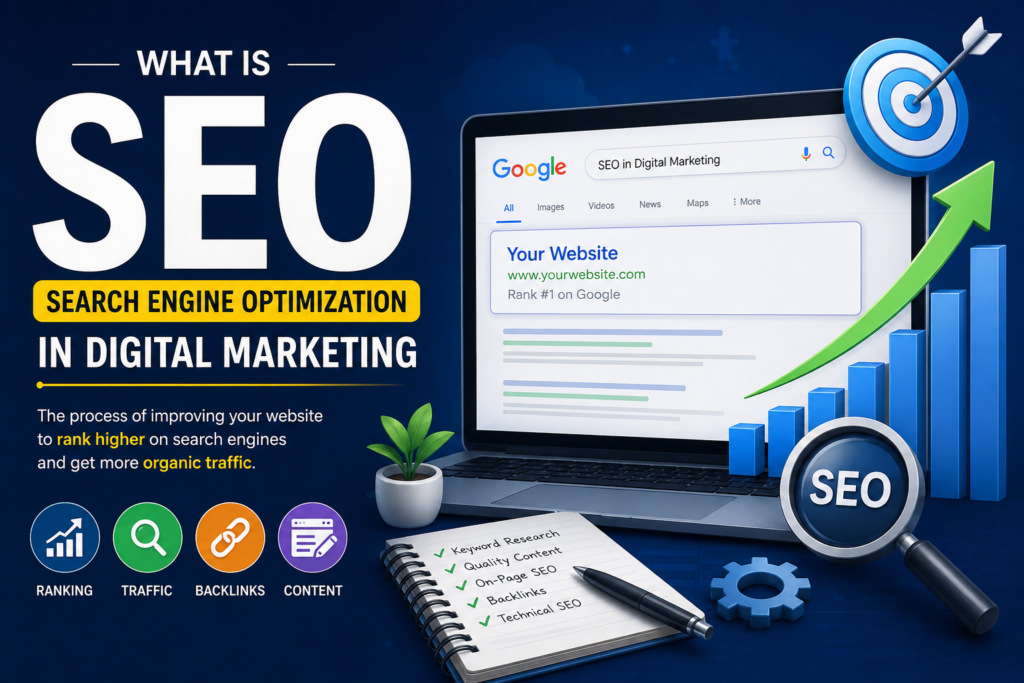
Search Engine Optimization (SEO) is the process of improving a website so that it ranks higher on search engines like Google, Bing, and Yahoo.
The main goal of SEO is to increase organic traffic, which means visitors coming to your website without paying for advertisements.
For example, if you own a digital marketing agency and someone searches for “best digital marketing services near me,” SEO helps your website appear in those search results.
The better your SEO, the higher your chances of attracting visitors, generating leads, and increasing sales.
Why is SEO Important in Digital Marketing?
SEO plays a major role in digital marketing because it helps businesses connect with their target audience at the right time.
Here are some key benefits of SEO:
1. Increases Website Traffic
When your website ranks higher on Google, more people can find and visit your website.
2. Builds Trust and Credibility
Users often trust websites that appear on the first page of search results. Higher rankings create a positive impression of your brand.
3. Generates Quality Leads
SEO targets people who are actively searching for information, products, or services. This means the traffic is more relevant and likely to convert.
4. Cost-Effective Marketing
Unlike paid advertising, SEO can continue bringing traffic even after the initial optimization work is completed.
5. Long-Term Results
A well-optimized website can generate traffic and leads for months or even years.
How Do Search Engines Work?
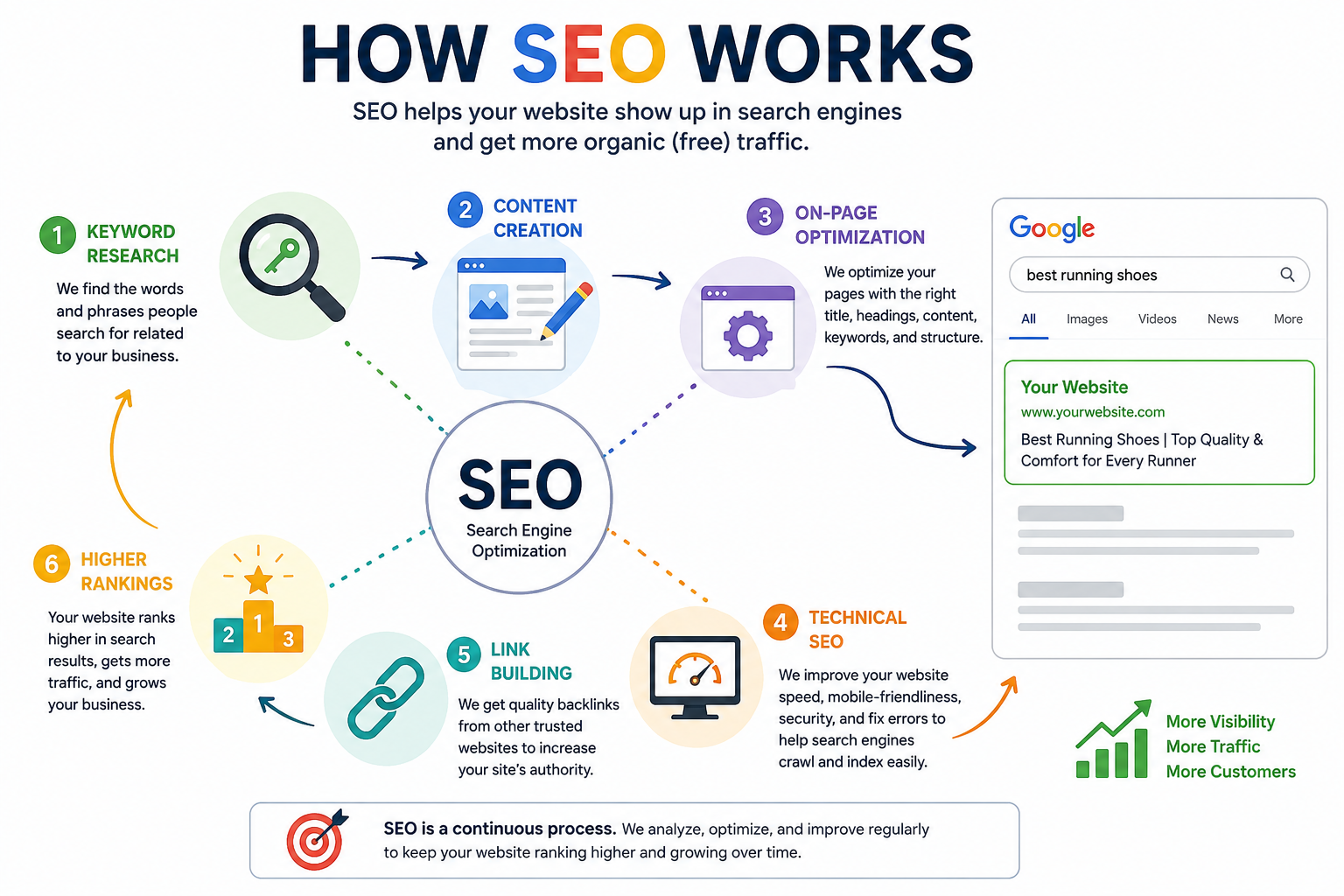
To understand SEO, it is important to know how search engines work.
Search engines follow three main steps:
Crawling
Search engines use bots, also called spiders, to discover pages on the internet.
Indexing
After discovering a webpage, the search engine stores and organizes its information in a database called an index.
Ranking
When someone searches for something, the search engine analyzes its index and displays the most relevant results.
Google uses hundreds of ranking factors to decide which pages deserve the top positions.
Types of SEO
SEO is generally divided into three main categories.
1. On-Page SEO
On-page SEO focuses on optimizing the content and structure of a webpage.
Examples include:
- Using target keywords naturally
- Writing SEO-friendly titles
- Creating helpful content
- Optimizing headings
- Adding internal links
- Improving image SEO
2. Off-Page SEO
Off-page SEO involves activities performed outside your website to improve authority and rankings.
Examples include:
- Building backlinks
- Guest posting
- Social media promotion
- Brand mentions
3. Technical SEO
Technical SEO ensures that search engines can easily crawl and understand your website.
Examples include:
- Improving website speed
- Mobile optimization
- Fixing broken links
- Creating XML sitemaps
- Enhancing website security
Important SEO Elements
Keyword Research
Keywords are the words and phrases people type into search engines.
For example:
- Digital Marketing
- SEO Services
- Social Media Marketing
- Content Marketing
Choosing the right keywords helps you attract the right audience.
Quality Content
Content is often called the backbone of SEO.
Google prefers content that is:
- Helpful
- Original
- Accurate
- Easy to understand
- Relevant to user needs
The more value your content provides, the better its chances of ranking.
Title Tags and Meta Descriptions
These are the first things users see in search results.
A compelling title and description can improve click-through rates and bring more visitors to your website.
Internal Linking
Internal links connect one page of your website to another.
Benefits include:
- Better user experience
- Easier navigation
- Improved SEO performance
Image Optimization
Optimized images help improve website speed and user experience.
Always:
- Compress image size
- Use descriptive file names
- Add relevant ALT text
Common SEO Mistakes to Avoid
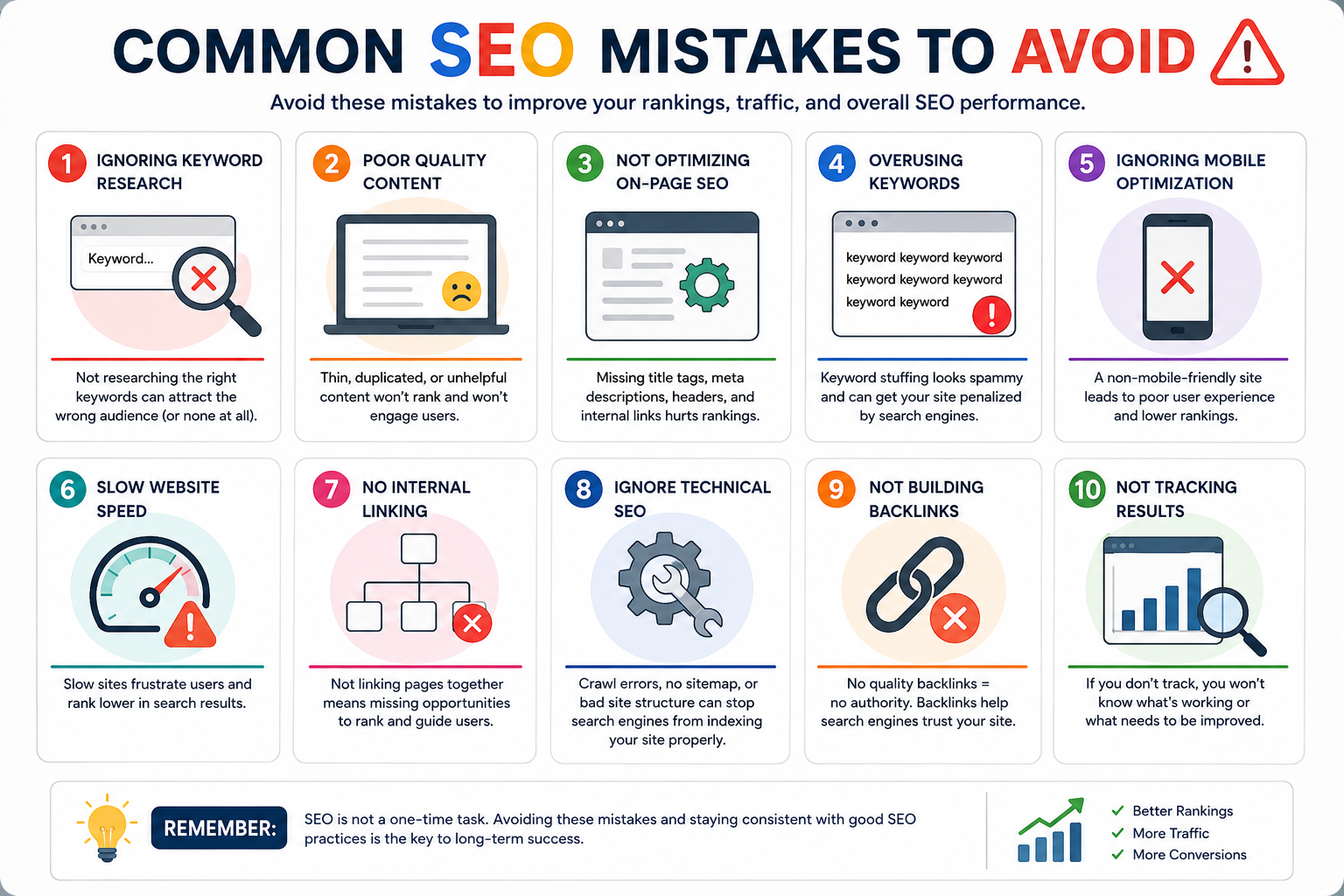
Many beginners make mistakes that can hurt rankings.
Some common mistakes include:
Keyword Stuffing
Using the same keyword excessively makes content look unnatural.
Ignoring Mobile Users
Most searches now happen on mobile devices. A mobile-friendly website is essential.
Poor Quality Content
Thin or copied content can negatively impact rankings.
Slow Website Speed
Users often leave websites that take too long to load.
Not Updating Content
Regular updates help keep content relevant and useful.
How Long Does SEO Take?
SEO is not a quick process.
Most websites start seeing noticeable improvements within 3 to 6 months, depending on:
- Competition
- Website age
- Content quality
- Backlink profile
- Optimization efforts
Businesses that consistently invest in SEO usually achieve better long-term results.
The Future of SEO
SEO continues to evolve as search engines become smarter.
Some important trends include:
- AI-powered search results
- Voice search optimization
- Mobile-first indexing
- User experience signals
- High-quality content creation
Businesses that adapt to these changes will have a stronger online presence.
SEO is a powerful part of digital marketing, but it is only one piece of the puzzle. To understand how SEO works with social media marketing, content creation, AI tools, email marketing, and paid advertising, check out our guide on <a href=”/why-should-you-learn-digital-marketing-in-2026″>Why You Should Learn Digital Marketing in 2026</a>. It explains why digital marketing is one of the most valuable skills to learn for future career growth and business success.
Conclusion
Search Engine Optimization (SEO) is one of the most important parts of digital marketing. It helps websites rank higher on search engines, attract more visitors, build trust, and generate leads without relying entirely on paid advertisements.
Whether you are a student, business owner, blogger, or digital marketer, learning SEO can help you grow your online presence and reach the right audience. By focusing on quality content, proper keyword usage, technical improvements, and user experience, you can achieve sustainable long-term success in the digital world.
SEO is not about tricking search engines. It is about creating valuable content and providing the best experience for users. When you do that consistently, better rankings naturally follow.
Now that you understand the fundamentals of SEO, the next step is learning how to apply these techniques in real-world digital marketing campaigns. If you want hands-on training in SEO, content marketing, social media marketing, and AI-powered marketing tools, explore the programs offered by Vidyarthi
Real-Life Example of SEO in Action
To understand the power of SEO, let’s look at a simple example.
Imagine you own a coaching institute that offers digital marketing courses. You create a website and publish information about your courses, fees, and success stories. However, thousands of other institutes are doing the same thing.
If your website is not optimized for search engines, potential students may never find you. But if you use SEO properly, your website can appear when someone searches for:
Best digital marketing course near me
Digital marketing training institute
SEO course for beginners
Online digital marketing classes
When your website appears on the first page of Google, more people visit your site, learn about your services, and contact you for enrollment. This is how SEO helps turn online searches into real business opportunities.
SEO vs Paid Advertising
Many beginners often ask whether they should choose SEO or paid advertising.
The truth is that both have their advantages.
Paid advertising can bring visitors immediately. As soon as you start running ads, people can see your website. However, the traffic stops when you stop paying.
SEO takes more time, but the results can last much longer. A well-ranked webpage can continue attracting visitors for months or even years without additional advertising costs.
For long-term digital marketing success, many businesses use a combination of SEO and paid advertising.
Essential SEO Tools for Beginners
Several tools can help improve your SEO efforts.
Google Search Console
Google Search Console helps website owners monitor their website’s performance in Google Search. It shows which keywords are bringing visitors and highlights technical issues that need fixing.
Google Analytics
Google Analytics helps track website traffic, user behavior, and conversion rates. It provides valuable insights into how visitors interact with your website.
Google Keyword Planner
This tool helps discover relevant keywords that people are searching for online.
Ahrefs
Ahrefs is one of the most popular SEO tools for keyword research, backlink analysis, and competitor research.
SEMrush
SEMrush helps businesses analyze competitors, track rankings, and discover new SEO opportunities.
SEO Best Practices for Beginners
If you are just starting with SEO, focus on these important practices:
Create helpful and original content.
Research keywords before writing.
Optimize page titles and headings.
Improve website loading speed.
Make your website mobile-friendly.
Add internal links between related pages.
Earn quality backlinks from trusted websites.
Regularly update old content.
Focus on user experience.
Monitor your performance using SEO tools.
Following these practices consistently can significantly improve your search engine rankings over time.
Final Thoughts
SEO has become one of the most valuable skills in digital marketing. Every business wants more visibility, more website visitors, and more customers. SEO helps achieve all these goals naturally through organic search traffic.
While SEO requires patience and consistent effort, the long-term benefits make it one of the best digital marketing investments. Whether you are running a business, managing a blog, or building a personal brand, understanding SEO can help you reach more people online and create sustainable growth.
The websites that provide the best experience, useful information, and genuine value to users are usually the ones that succeed in search engines. Therefore, focus on helping your audience first, and SEO success will follow naturally.